SITEMAP (IA DRAFT) · 2026-08-13HomePlatformOverviewBuild with AIUnderstanding LayerAutopilotObservabilityAPI BuilderMCP BuilderDatabaseDevelopersXanoTSSecurityTemplates ↗SolutionsTrust what AI builtPilot→ProductionLogic CentralizationLegacy Modernizationvs SupabaseEnterprisePricingLearnDocs · Academy · Blog — not drafted
Solutions · Pilot to production

The bottleneck moved from speed to control.

Your teams are already building with AI. Xano makes the pilot and the production system the same governed artifact, on the same platform.

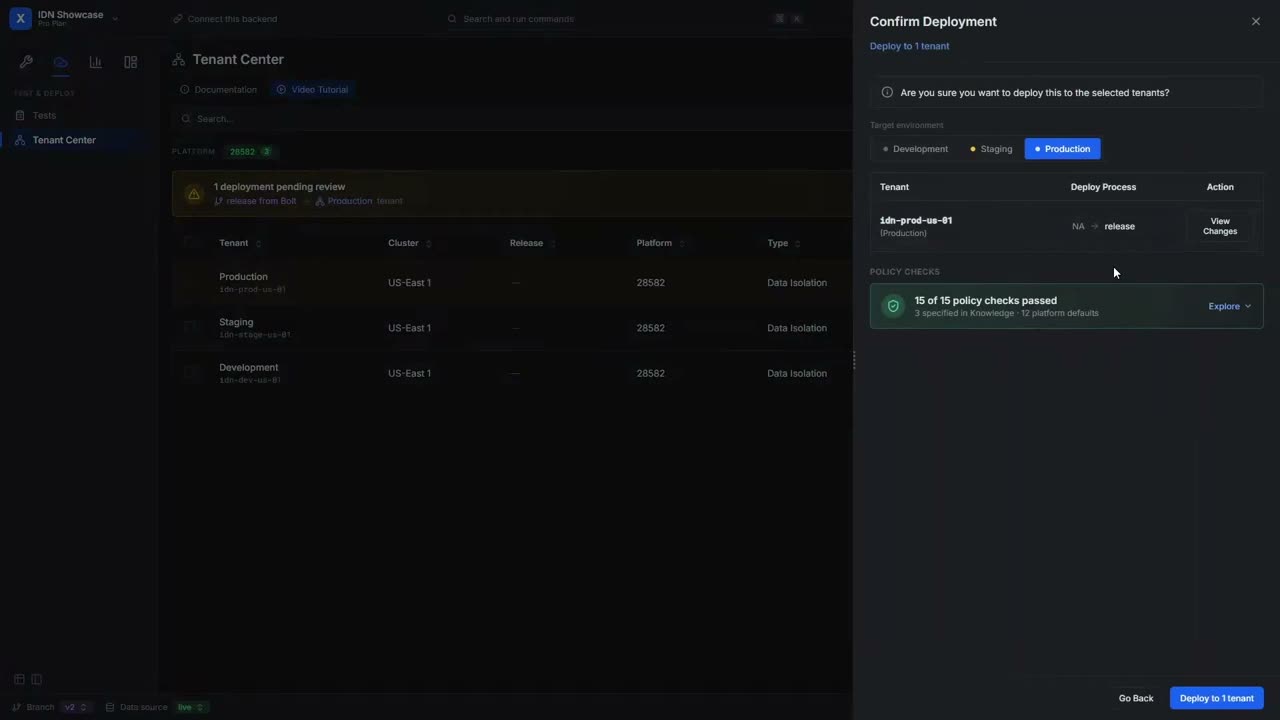
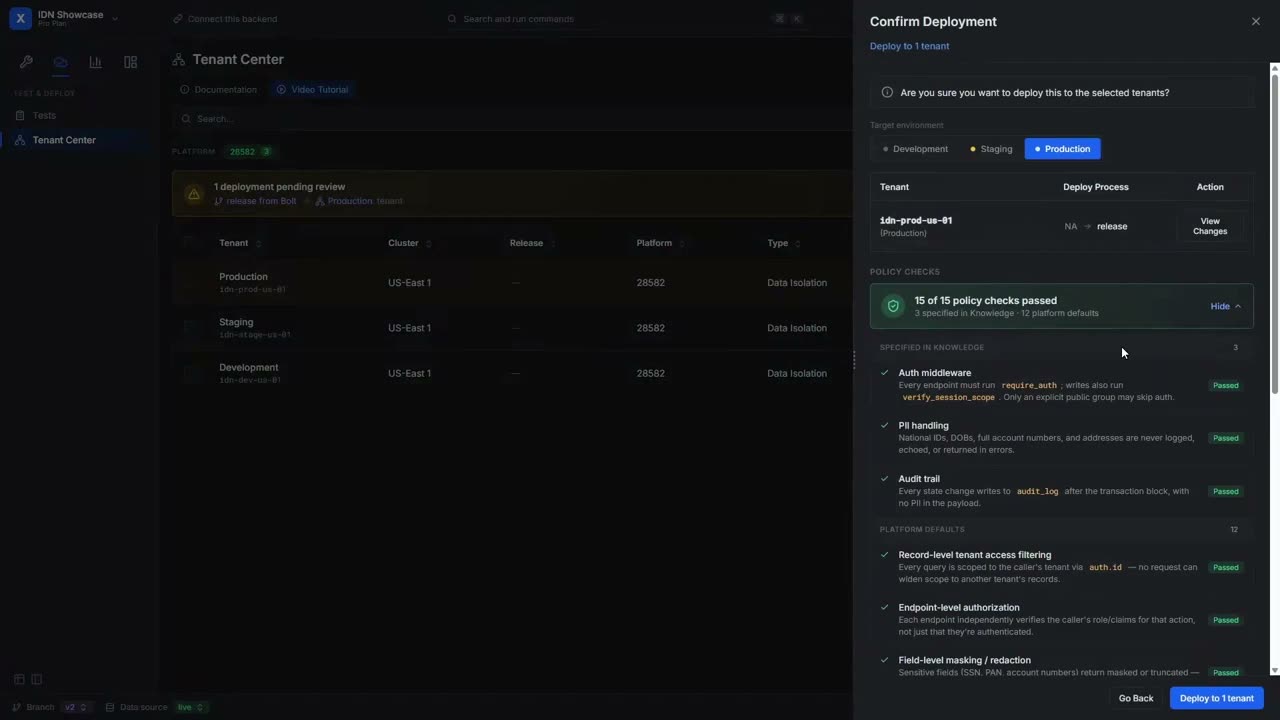
A deployment confirmation panel targeting a production tenant, showing fifteen of fifteen policy checks passed.
15 of 15 policy checks passed. Then, and only then, production.

Everyone is building. Almost nothing ships.

95%

of enterprise gen-AI pilots deliver zero measurable impact (MIT).

Workflow gap

MIT's diagnosis. The models work. The path to production doesn't.

The hard part

The prototype was easy. Production is where pilots go to die.

Ungoverned prototypes are the new shadow IT.

Every prototype that leaves the demo hits the same four walls.

Localhost isn't production

What runs on a laptop is not what ships.

Logic scatters

Every new app carries its own copy of the business rules.

Keys leak

Credentials end up where they shouldn't.

Nothing is auditable

Built across five surfaces, debuggable on none.

The usual fix is to slow everything down. Review at the end buys you a queue and a rebuild. The governance never arrives.

Guardrails, not gatekeeping.

Every project governed before the first prompt, instead of reviewed after the last one.

Pilot to production is the enterprise AI SDLC.

Agents write more of the code every quarter. No one reads all of it later. So the lifecycle that matters runs left to right, and one artifact travels the whole way:

Policy→ Build→ Sandbox→ Review→ Promote

Graduation is a promotion, not a rewrite.

We experimented with AI builders which were great for a hackathon, but our business users were unable to move it into something usable. We're looking for anything to help us have consistency along the innovation lifecycle, from ideation to prototype, MVP, and production.

Chief Information Officer, BNP Paribas
How it works

Set the policy once. Everything inherits it.

Set the rules

IT writes the policy

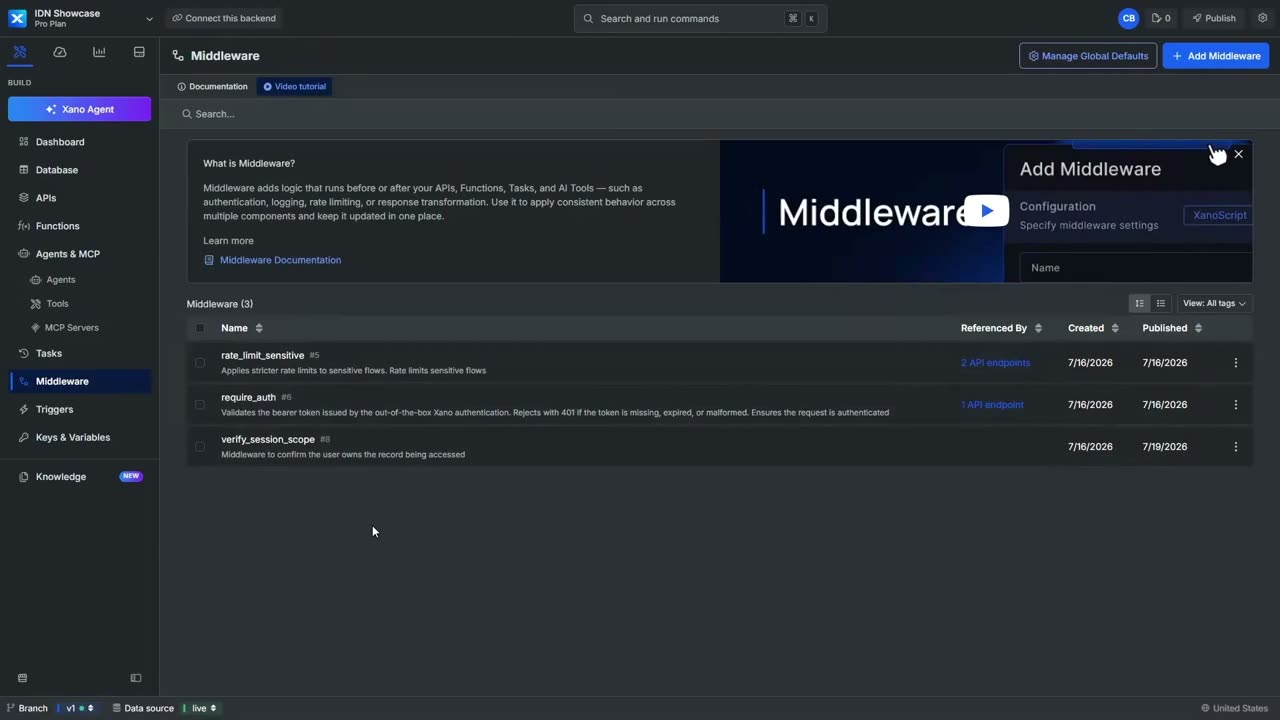
A middleware list showing rate_limit_sensitive, require_auth and verify_session_scope.
Auth. Rate limits. Session scope. Authored once, locked where it matters.

Every project in the workspace inherits it — and what security sets stays set.

Everyone builds

In their own tools

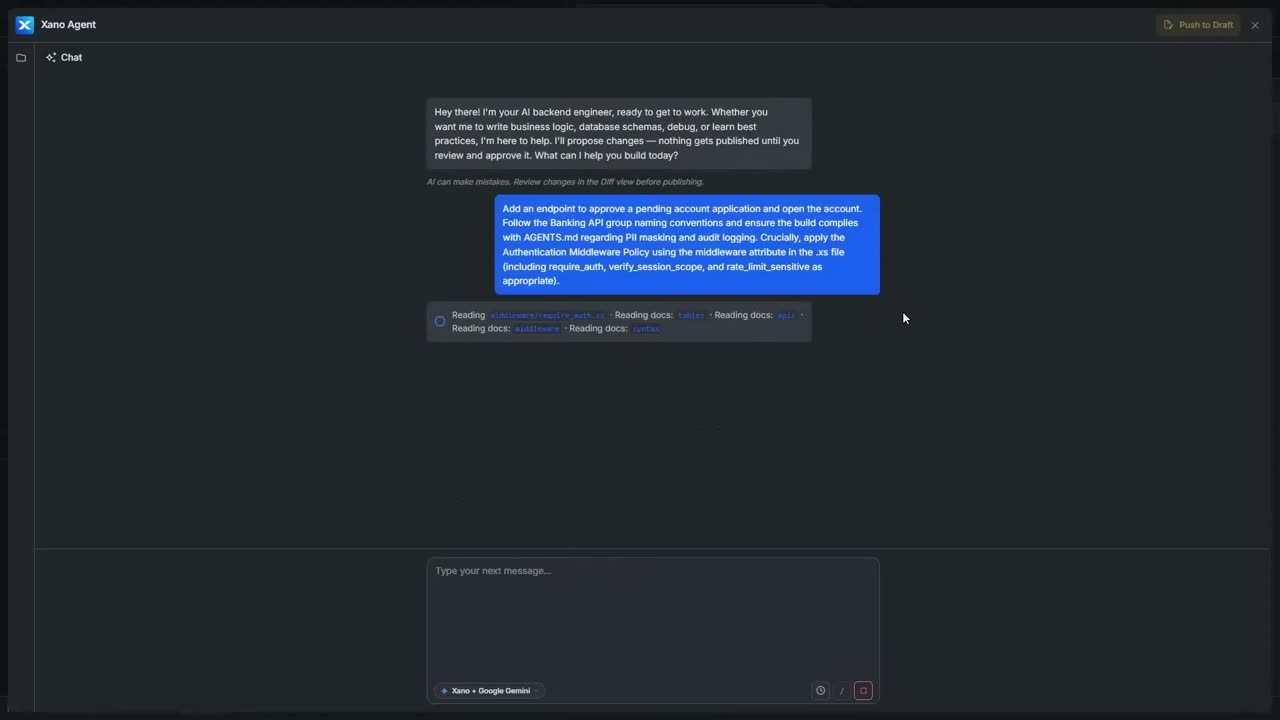
An agent reading the workspace middleware and docs before building.
The agent reads your rules before it writes a line.

Developers bring Claude Code, Codex, or Cursor; business users bring a Bolt front end. The MCP hands every agent the same policy, docs and skills — the prompt never mentions PII rules, and the app inherits them anyway.

Ship what passes

Nothing touches production

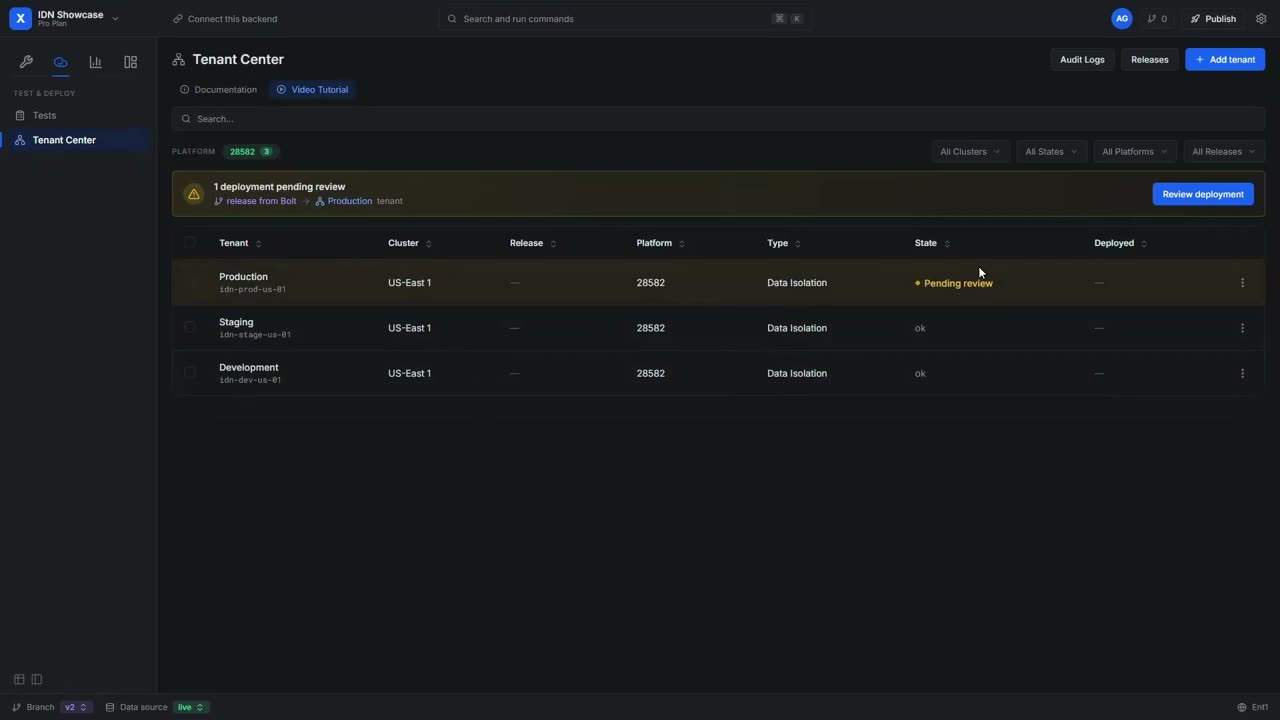
A tenant center listing isolated production, staging and development tenants.
Isolated tenants. Test freely.

Every build runs in an ephemeral sandbox until IT says otherwise.

Ship what passes

Review is a real check

A policy check list: auth middleware, PII handling and audit trail, each passed.
Your policies plus twelve platform defaults. Passed.

The release IT reviews is the release that runs. Promote the exact artifact.

A harness your organization owns.

Most AI harnesses today are one developer's markdown files, and no two are alike. This one is organizational: auth is done this way, every time, checked again at promotion. Regulated? HIPAA, SOC 2 and your audit rules live in the same policy layer, enforced per environment and per tenant.

Bring the stack you have.

Postgres included, Snowflake and your services connected, any major cloud or on-prem, under your certifications. Host your static front end on Xano or connect one built anywhere.

Let them build. Ship what matters.

Google's twenty percent time produced Gmail. You never know which experiment will matter. The harness exists so the one that does can reach production without a rewrite.